CBB logo
  • Home
  • Map
  • About
  • Sources
  • API

  • life

    Biota

  • kingdom

    Animalia

  • phylum

    Chordata

  • class

    Aves

  • order

    Passeriformes

Children (33)

  • family

    Acrocephalidae

  • family

    Aegithalidae

  • family

    Alaudidae

  • family

    Calcariidae

  • family

    Certhiidae

  • Load more

    Empty

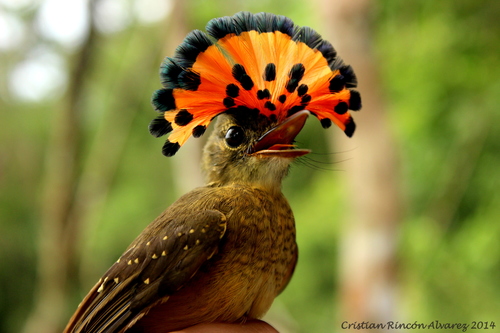
Representative image of Passeriformes

order

Passeriformes

Accepted

ID:4849

  • COL

  • GBIF

  • BOLD

  • NCBI

OverviewDistributionGenetics

Balearica full logo
CBB logo

Sitemap

  • Home
  • Map
  • Methodology
  • Team

Legal advice

  • Disclaimer
  • Privacy
  • Cookies

Contact

  • Centre Balear de Biodiversitat
  • Complex Balear de R+D+I
  • centre.biodiversitat@uib.es
  • (+34) 971 17 24 54

Statistics

Number of classifications at each rank from the current taxon.

  • -

    kingdom

  • -

    phylum

  • -

    class

  • -

    order

  • 33

    family

  • 86

    genus

  • 198

    species

  • 99

    subspecies

  • -

    variety

Habitats

Standard terms used to describe the major habitats and systems in which the taxon occur.

FreshwaterMarineTerrestrial
  • Desert

    Arid sandy, stony or rocky substrate landscapes with a sparse plant cover, except in depressions where water accumulates.

  • Rocky areas

    Defined by minimal soil, sparse vegetation, and extreme conditions.

  • Grassland

    Comprised of grasses and broadleaved herbaceous plants, and are either without woody plants.

  • Savanna

    Dominated by a grass ground cover with an overstorey of widely spaced trees and shrubs.

  • Shrubland

    Includes ecosystems dominated by shrubs and low woody vegetation, often interspersed with grasses or sparse trees.

  • Artificial aquatic

    Human-made water bodies such as reservoirs, canals, and ponds.

  • Marine coastal

    Coastal habitats above the high tide mark.

  • Artificial terrestrial

    Human-made environments such as urban areas, agricultural lands, and transport corridors.

  • Wetlands (inland)

    Characterized by waterlogged soils, seasonal or permanent water, and vegetation adapted to saturated conditions.

  • Forest

    Continuous stand of trees and includes both forested areas (generally with a closed canopy) and wooded areas.

  • Marine intertidal

    Area of the shore between the extremes of high and low tides.

Taxon composition

    (198) Total species

  • Muscicapidae

    25 (12.63%)

  • Sylviidae

    20 (10.10%)

  • Fringillidae

    17 (8.59%)

  • Acrocephalidae

    13 (6.57%)

  • Phylloscopidae

    13 (6.57%)

  • Load more